- Blog
Why Your Hand Falls Asleep at Night & When It’s a Sign of Something More
Posted on 10-23-2026 in Cubital Tunnel Syndrome, Wrist, Carpal Tunnel Syndrome, Arm, Nerve Pathology & Hand by Dr. Steven Kronlage, Dr. Alex Coleman, Dr. James Piorkowski
Posted on 10-23-2026 in Cubital Tunnel Syndrome, Wrist, Carpal Tunnel Syndrome, Arm, Nerve Pathology & Hand by Dr. Steven Kronlage, Dr. Alex Coleman, Dr. James Piorkowski
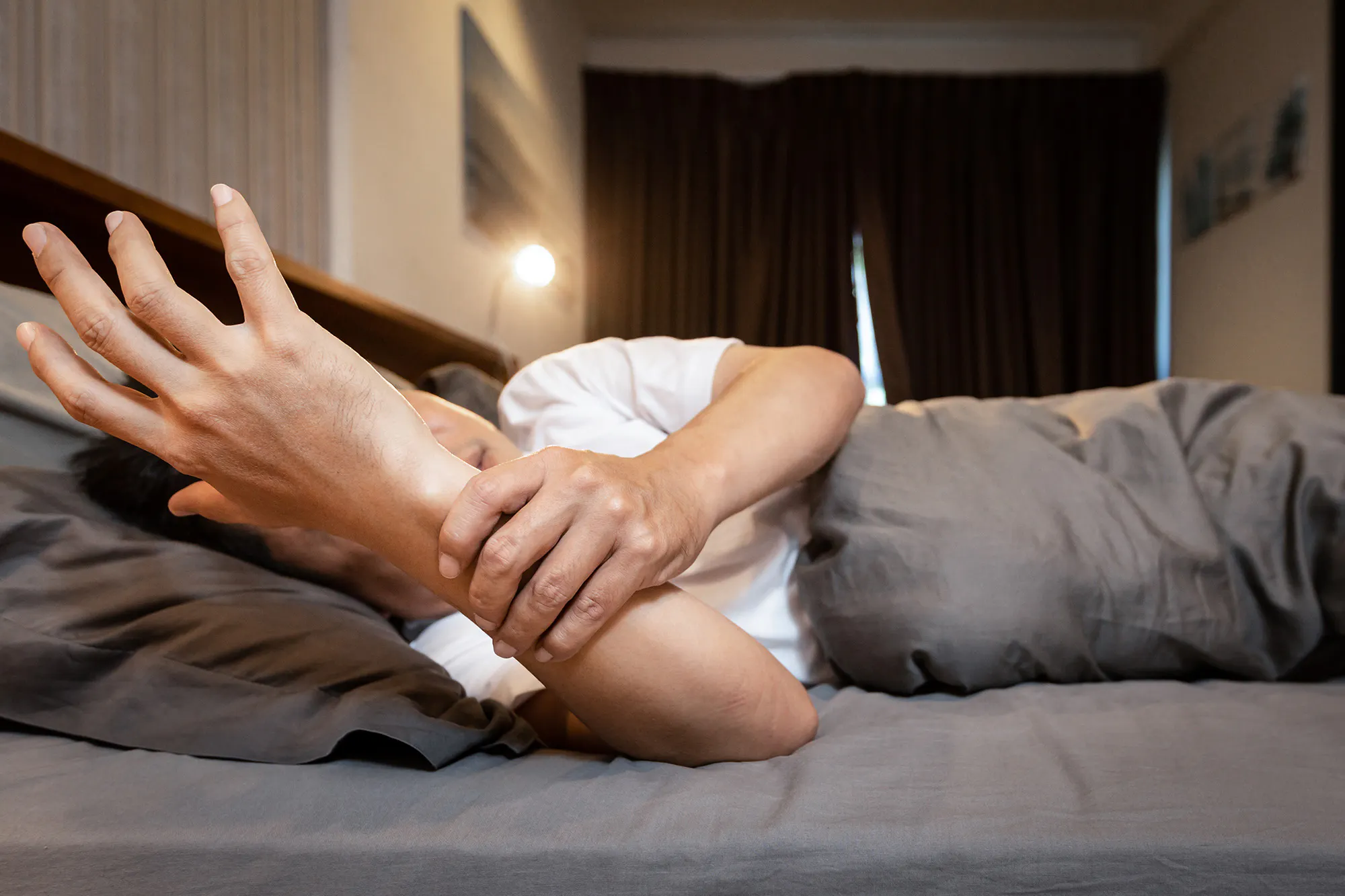
Waking up in the middle of the night with a numb or “asleep” hand is something many people occasionally experience. Often, it’s easy to dismiss as a temporary sensation caused by sleeping in an awkward position that quickly resolves once you move your hand or change positions. However, when it becomes a regular occurrence, waking you up night after night or if it begins to linger into the day, it may be a sign that something more is going on beneath the surface.
In many cases, persistent nighttime numbness is related to nerve compression, a condition in which one of the nerves that provides sensation and strength to the hand becomes irritated or compressed along its path. The reason these symptoms often appear at night is related to how we sleep. Wrist or elbow positioning during sleep can place prolonged pressure on sensitive areas where nerves travel close to the surface. For some individuals, this is enough to trigger occasional numbness. For others, especially when an underlying condition is present, those same positions can consistently aggravate the nerve.
One of the most common causes of nighttime hand numbness is Carpal Tunnel Syndrome, which occurs when the median nerve is compressed at the wrist. This typically affects the thumb, index, middle, and part of the ring finger, and symptoms are often most noticeable at night. The American Academy of Orthopaedic Surgeons (AAOS) notes that many patients first recognize carpal tunnel syndrome because of sleep disruption caused by numbness or tingling.
However, not all nerve-related symptoms originate at the wrist. A condition known as Cubital Tunnel Syndrome, which involves compression of the ulnar nerve at the elbow, can also cause nighttime symptoms, particularly numbness in the ring and small fingers. Sleeping with the elbow bent for extended periods can increase pressure on this nerve, leading to similar discomfort. In some cases, the problem may even originate above the elbow. Nerves that originate in the neck travel down into the arm and hand, and when these nerves are irritated or compressed, symptoms can radiate into the hand. Cervical spine nerve compression, also known as cervical radiculopathy, can present as numbness or tingling in the upper extremity.
Over time, what begins as mild, occasional symptoms can become more persistent and disruptive, particularly during periods of rest, such as sleep. While occasional numbness may not be concerning, certain patterns should not be ignored. If symptoms begin to occur regularly, affect the same fingers, or are accompanied by weakness or a tendency to drop objects, it may indicate that the nerve is under ongoing stress. Left untreated, some nerve compression conditions can progress, potentially leading to more lasting changes in sensation or strength.
The good news is that early evaluation often allows for more conservative treatment options. In many cases, symptoms can be managed with non-surgical approaches such as bracing, activity modification or sleeping with a wrist brace or an elbow brace, depending on the nerve involved. When symptoms are more advanced or do not respond to these measures, procedures may be recommended to address the underlying cause and protect long-term nerve health. Ultimately, recurring nighttime numbness is not something you have to simply live with. It is often an early signal from your body that something needs attention, and addressing it early can make a meaningful difference in both comfort and long-term function.
If you are waking up frequently with numbness, tingling, or weakness in your hand, specialized care can help identify the cause and guide the right treatment plan. Fellowship-trained Orthopaedic Hand Surgeons, Dr. Steven Kronlage, Dr. Alex Coleman, and Dr. James Piorkowski, provide expert evaluation and treatment for hand and upper extremity conditions. To schedule an appointment, call 850-807-4200 or complete our Online Appointment Request Form.
Watch the Bone & Joint Brief blog highlight video below.

You roll an ankle on the court, feel a pull in your hamstring during a run or land awkwardly during a game. Once the initial surprise wears off, the next question is usually the same: What should I do now?


Each year, from October 6 to 12, we celebrate National Physician Assistants Week and recognize this dedicated group of professionals who provide exceptional care to our patients at North Florida Bone & Joint Specialists. Each plays a transformative role in our practice and in the communities we serve by delivering high-quality, collaborative care that prioritizes patients' needs.